Indians, Caste and Ego

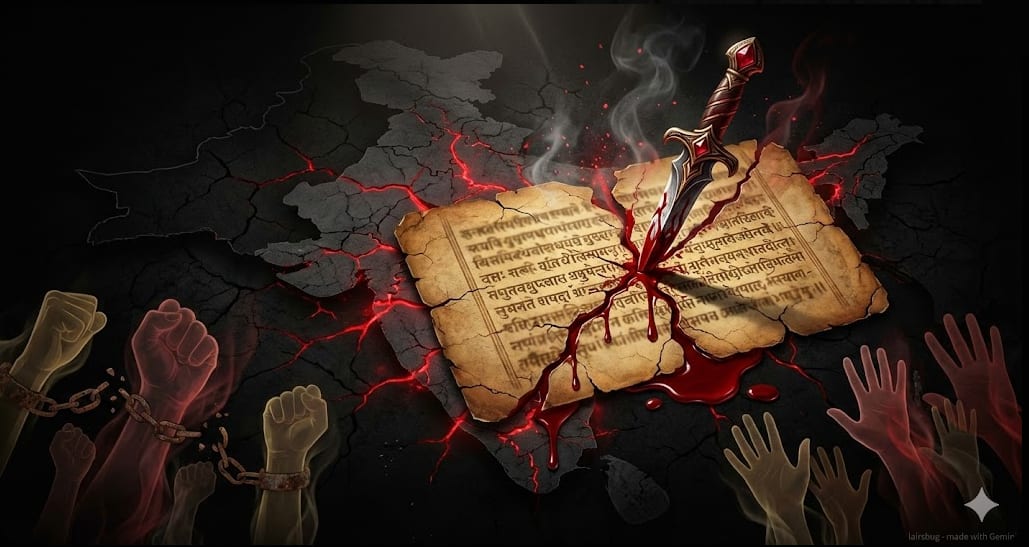
Caste. Varna. Jaati. - A dagger in the heart of Bharat
This concept has been part of India’s history for a very long time, a hierarchy stained by blood and darkness that is still to this day being defended by those who benefit from it.
"Honour killing" - a murder based on the belief that the victim dishonoured or brought shame to family or community.
Honour Killings in 2025
Saksham Tate 21-years old: Nanded, Mahrashtra - beaten to death, by girlfriend's father and brothers.
Muskan 17-years old: Shamli, Uttar Pradesh - Shot dead by her own father and minor-brother.
Rahul Kumar 25-years old: Darbhanga, Bihar - Shot dead by father-in-law in front of his wife.
Kavin Selvaganesh 27-years old: Tirunelveli, Tamil Nadu - Beaten to death by wife's brother.
Neha Rathore 23-years old: Greater Noida, Uttar Pradesh - Strangled to death day after wedding by her father and younger brother.
These are some recent cases of Honour killing in 2025, the motive in all this is preserving the honour of family - with violence. Disturbingly, many on the internet have celebrated these murders, glorifying the killers as heroes preserving family honour
Inter-caste marriage is still a widespread issue among Indians, Murders and Rapes are often committed in name of preserving purity.
Many defend these Honour killings with various perspectives, statements and other nonsense. We Indians have a habit to glorify our past. Let's play facts and history,
The term "Caste" is widely used today but the concept originates from two distinct systems. Varna and Jaati.
Varna
The concept of "Varna" literally means 'color', 'type', 'order', or 'class' and defines four broad social categories of a Vedic society.
The four principal categories defined in ancient texts are:
- Brahmins (ब्राह्मण) : Gurus, Scholars, Pandits, Teachers.
- Kshatriya (क्षत्रिय) : Administrators, Rulers, Kings, Warriors.
- Vaishya (वैश्य) : Traders, Business owners, Merchants.
- Shudra (शूद्र) : Labourers, Sweepers, Service providers.
The origin of these divisions is traced back to the Purush Suktam verse of the ancient Sanskrit Rig Veda.
Jaati
The term Jaati (Sanskrit: jāti), which is derived from a Sanskrit root 'Jan' which literally means 'birth', is a core concept in the Indian social classification system, distinguishing itself from the broader theoretical framework of Varna
Pinpointing the exact origin of thousands of Jaatis is a disputed and complex challenge even among scholars.
Role of Manusmriti in this chaos
The Manusmriti, written between 200 BCE and 200 CE, marked a major shift from the Vedic varna system's occupational flexibility to a rigid, birth-based hierarchy - Jaati. It explicitly declares varna determined by janma (birth), not guna (attributes) or karma (actions), stating in Chapter 1, Verse 31 that Brahmins, Kshatriyas, Vaishyas, and Shudras emerge from Brahma's body parts in descending order of purity and privilege, with no flexibility allowed. This divine sanction locked individuals into lifelong roles: Brahmins as priests and teachers monopolizing Vedic knowledge, Kshatriyas as rulers enforcing dharma, Vaishyas as economic producers, and Shudras as eternal servants barred from rituals or wealth accumulation.
Draconian penalties targeted lower varnas to prevent "pollution" or "impurity." Shudras faced physical punishments. Molten lead in mouths or cutting out tongues for reciting Vedas (Chapter 4, Verse 99; Chapter 8, Verse 272), or execution for insulting Brahmins (Chapter 8, Verse 270). Inter-varna unions were criminalized as anuloma (upper male-lower female, producing mixed offspring) or pratiloma (lower male-upper female, deemed "Chandala", the lowest untouchables handling filth). Women of all castes were infantilized, dependent on fathers, husbands, or sons, with Shudra women explicitly servicing upper-caste men while denied autonomy.
Manusmriti's framework spawned thousands of jaatis endogamous sub-castes tied to region, craft, and purity creating a granular hierarchy beyond four varnas. Avarnas like Chandalas, born of pratiloma unions, were avarna (outside varna), forced to live in cremation grounds, wear rags, and eat dead flesh of animals, their touch deemed polluting upper castes from afar. Panchayats (caste councils) policed this via excommunication, boycotts, or violence, ensuring economic dependence: Shudras could not own land or study, perpetuating illiteracy and servitude.
This rigidification isolated groups, fostering antagonism over 6,000 jaatis by medieval times while Brahmins claimed interpretive monopoly over dharma. Anti-caste reformers like Ambedkar burned Manusmriti in 1927, and Phule decried it as Brahmin fraud, highlighting its role in systemic discrimination. Despite some verses allowing Shudra learning from faith (debated interpretations), enforcement prioritized hierarchy, stifling merit and innovation.
Oppression and violence
The core mechanism of oppression was the concept of ashuddha (impure), where lower castes, especially Dalits (avarnas), were deemed inherently impure due to birth and occupation. Upper castes enforced spatial and social distance: Dalits lived in segregated small villages (ceri or tanda), barred from village wells, temples, and upper-caste homes; their shadow or touch required purification rituals like bathing. Violations triggered immediate violence, assaults, rapes, or murders to "cleanse" the affront, as documented in historical accounts from medieval bhakti texts and colonial reports.
Direct brutality included honor killings for inter-caste marriages (especially pratiloma), public humiliations like parading naked or blackening faces, and massacres by private militias (senas). Upper castes formed senas like Ranvir Sena (Bhumihars in Bihar), responsible for 27 massacres (1995–2000) killing 263 Dalits in reprisal for wage demands or land claims, e.g., Bathani Tola (1996) where 21 were slaughtered. Weapons ranged from lathis to guns, often with police complicity.
Women bore compounded oppression: Dalit women faced gang rapes as "teaching" for perceived slights, while practices like devadasi (dedicating girls to temples as prostitutes) and sati were disproportionately enforced on lowers. Symbolic acts tonsuring heads, forcing cow dung consumption reinforced inferiority, psychologically scarring communities and quelling resistance.
And yet to this day, we still treat Jati-Pratha as a part of our culture that too with proud. When all this gave is hatred and communal violence.
We claim ourselves to be Religious yet we can't see what our Idols taught us, Lord Rama - ate the berries of Shabri Mata, a lady born in shudra Varna,
Lord Krishna who taught us in Bhagwad Gita that Varna is not decided by birth but actions of one, He himself stated that there are four Varna but never once of Jaati.
We give statements that they were divine beings and God and we aren't comparable to them. We audaciously neglect the fact in these statements that they while being God still were in human forms to teach us, but we just don't accept that.
It's an irony to call ourselves religious while we don't read our scriptures, our own religious texts.
In modern times we blindly follow Caste system to keep our ego intact. It's not a matter of religion - it's a matter of Ego.
Post written by - @lairs.bug
find me on Github, or just mail me @lairs.bug@gmail.com
Sources : Wikipedia/manusmriti, multiresearchjournal