Karma is a myth

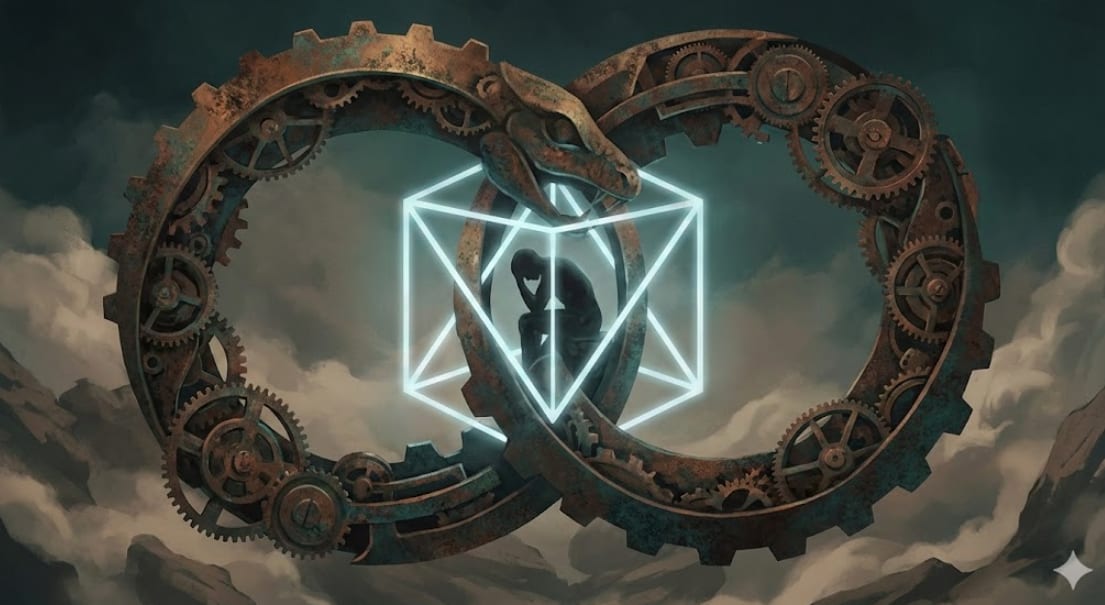
There's a famous quote from "Neil deGrasse Tyson," an American astrophysicist and writer.
“The universe is under no obligation to make sense to you.”
Karma. Some say it is divine justice. While others say it is a system of nature.
I say it's a comfort that humans chose to give themselves a sense of agency to keep society in line.
Origin of Karma and what does it exactly mean?
The word "Karma" is derived from the Sanskrit term "कर्म," which explicitly means action or work. In multiple religions, this concept of cause and effect is named differently, but they all have their own specific sets of good and bad deeds that affect our Karmic debts.
In Hinduism, deity worship is considered pure and conducive to innate peace, whereas in other religions, such as Christianity and Islam, it is regarded as a sin, a grave sin. We are not pointing to any religion as being right or wrong. I am simply saying that every religion has its own specific and unique set of rules for its karmic accounts.
If the same action results in 'good' points in one ledger and 'bad' points in another, the system is clearly human-made, not a universal constant.
Here's why the concept of Karma is broken fundamentally.
"Why do good people suffer while bad ones thrive?"
There's no perfect answer to this. Some say that it's their karmic debt from past lives catching up to them. But then another question arises.
"Why is it inconsistent with timings if it's a law? Why is it sometimes instant? sometimes delayed? sometimes never?"
Every law that is from nature is either deterministic or empirically consistent, and in most cases, both, be it the laws of physics or arithmetic. Then why is karma too deterministic or empirically consistent? This alone can prove that karma may not be a law of nature until proven otherwise.
The argument that suffering is the result of actions from a past life is logically flawed.
Consider this analogy.
Imagine a king known to show off as benevolent across the land. One ordinary day, he sends soldiers to your house, arrests you, and imposes a fine large enough to ruin you financially. Confused, you ask what crime you committed to deserve such punishment.
Before the king responds, a minister intervenes:
“Your Majesty is known for his benevolence. Therefore, you must have given him a reason to punish you. You would not be standing here if you had done nothing wrong. The fact that you are punished proves your guilt.”
The flaw is obvious.
The argument assumes what it is trying to prove.
The king is benevolent; he only punishes the guilty.
You are punished, therefore you must be guilty.
No evidence is required. No explanation is given. The conclusion is baked into the premise.
The accused is never told what their crime was, only that it must have existed. Punishment becomes self-justifying. This kind of argument is a fallacy called circular reasoning, where the argument assumes that it is correct to prove itself.
And this is not justice. This is the logic of dictatorships and tyrannies, where authority is declared infallible, and suffering is treated as proof of wrongdoing rather than a problem to be examined.
And when someone says that, "Oh, he is suffering, they must have done something wrong in their past life," It falls under that same fallacy where one assumes that karma is real, and therefore, this is the proof of their suffering being their karmic debts.
Moving further, we have another question. Why does Karma mirror human morals? Why not animals? The lion also kills a deer, but is it free from the karmic debt that comes with killing one if a human does? If it's a law of nature, then why are only humans subject to it?
A common answer to this question from believers is that an animal acts on instincts and need and they lack the freedom of will; therefore, they don't qualify to be judged morally.
And that answer itself undermines the concept of karma as divine justice or a natural law. Gravity doesn't care if the subject is a ball or some saint before making them hit pavement hard on the face, so why does karma judge before acting? And why, judging from human morals?
From a human's point of view, killing a deer is a heinous and heartless act, but from a plant's point of view, the one who kills the deer is a saint because they just got spared from becoming the deer's meal. Why is karma not on this moral? Why humans'?
These inconsistencies, lack of empirical evidence, and flaws within the innate framework are proof in themselves that the traditional sense of Karma is fundamentally flawed.
If we look into basic human psychology, it tells us that humans tend to understand everything because in the primal ages, when survival was a constant struggle, our ancestors had to keep a check on the environment. After all, a single moment of uncertainty could have been the last moment.
Karma is just another example of that instinct to understand the uncertain, like the evil eye, curse, and many other beliefs. And as stated earlier. The universe does not owe us any explanation for the chaos within
Post written by - @lairs.bug
find me on Github, or mail me @lairs.bug@gmail.com