The Digital Colosseum

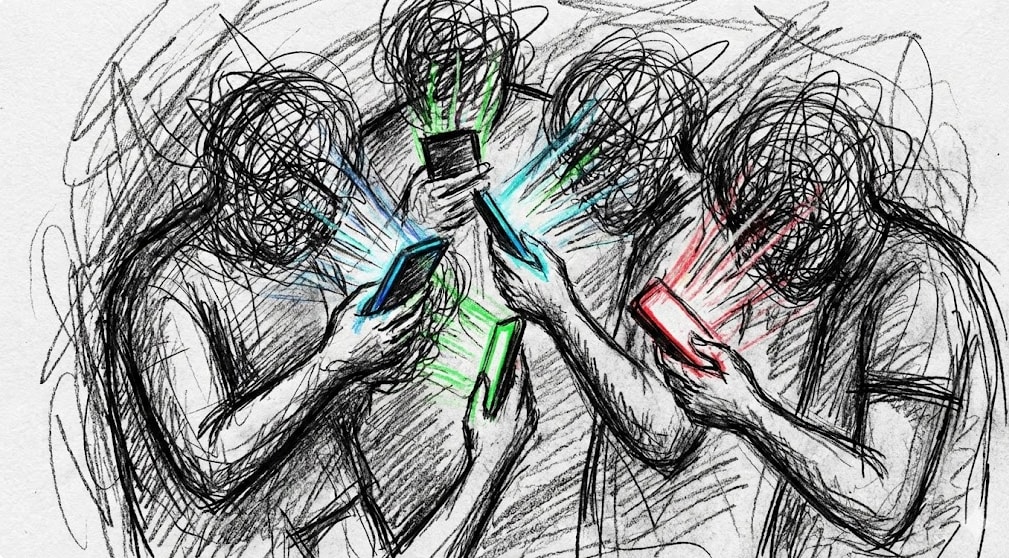
You’re scrolling. It’s 11:30 PM, and you’re looking for a hit of "bedtime dopamine," maybe a recipe for a 15-minute pasta or a golden retriever failing a fetch. Instead, the screen flickers, and you’re met with a hateful religious reel.
It’s sharp, provoking, and designed to sting. It mocks a belief system, targets a billion people, or twists a sacred text into a punchline of malice. Your mood spikes. You feel that hot, familiar prickle of indignation. You might even start typing a rebuttal in your head before your thumb reaches the comment section.
At that moment, you aren’t just a user; you are a gladiator. And the platform? It’s the Digital Colosseum.
Why the Internet Rewards Our Worst Instincts
The fundamental question of our era is: Why does the internet seem to reward our worst instincts? Why does a thoughtful, 10-minute explanation of theological nuance get fifty views, while a thirty-second clip of religious vitriol gets five million?
The answer isn't that humanity has suddenly become more "evil." It’s that we find them more engaging. More personal. And more real. While they bag views and attention.
In the ancient Roman Colosseum, the crowd didn't gather to watch a civil debate on public policy; they gathered for the blood. Modern algorithms operate on a similar, albeit Cold-blood, logic. They are designed with a singular goal: Maximum Engagement. In the eyes of a machine learning model, "engagement" is a neutral metric. It doesn't care if you are liking a photo of a sunset or furiously typing a 500-word correction to a racist. Both actions keep the screen on. Both actions allow the platform to serve you more ads. But as it turns out, outrage is the most liquid currency in the attention economy.
The Architecture of Amplification
To understand how hate becomes profit, we have to look at the "math" of the feed. Algorithms are essentially prediction engines. They ask: "What can I show this user that will keep them from closing the app for another thirty seconds?"
- High-Arousal Emotions: Research consistently shows that "high-arousal" emotions, anger, disgust, and fear drive much higher sharing rates than "low-arousal" ones like contentment or sadness.
- The Outgroup Effect: We are evolutionarily wired to notice threats. When we see a "hateful reel" attacking our own identity or values, our amygdala fires. We feel a biological urgency to defend our "tribe."
- The Feedback Loop: When you comment on that hateful reel, even if it’s to call it "disgusting," the algorithm registers that you are highly engaged. It doesn't read your words; it reads your dwell time. It then serves that same reel to more people like you, and more people unlike you, knowing it will spark a firestorm.
Monetizing the Arena
There is a cold, hard economic reality behind the "Digital Colosseum." Every time a religious flame war erupts in the comments, the platform's stock price effectively gains a microscopic boost.
When a reel goes viral because it is hateful, it becomes a "Rage-Bait" asset. Brands (often unknowingly) have their ads played before or after this content. The creator of the reel earns "clout" or literal ad-revenue shares. The platform earns data on your psychological triggers.
We are living in a system where misunderstanding is a business model. If everyone understood one another and felt at peace, we would probably put our phones down and go for a walk. Peace is bad for the quarterly earnings report.
The Philosophical Hook: The Gladiator’s Dilemma
The tragedy of the Digital Colosseum is that we think we are "fighting the good fight" when we engage with hate. We think we are standing up for our faith or our values.
But in reality, the only way to win in the Colosseum is to leave the arena. When we "dunk" on a hateful post, we provide the very engagement that ensures ten more people will see it. We are the unpaid actors in a play scripted by an algorithm that views our deepest convictions as "metadata."
The internet rewards our worst instincts because those instincts are predictable. Anger is a reflex; nuance is a choice. Hatred is a shortcut to a "share"; empathy is a slow, difficult climb.
The Psychological Toll: The Erosion of the Private Self
The mechanism of the Digital Colosseum doesn't just steal our time; it reconfigures our psychology. When we are constantly exposed to "rage-bait," our nervous systems exist in a state of chronic hyper-vigilance. We begin to view the world not through the lens of curiosity, but through the lens of threat detection.
Psychologically, this creates a phenomenon known as "Moral Grandstanding." To survive in the Colosseum, users feel a subconscious pressure to signal their virtue or their "tribe" as loudly as possible. We stop posting what we actually believe and start posting what we think will protect us from the mob or earn us the most digital "armor." Over time, the internal voice, the one capable of doubt, nuance, and quiet reflection, is drowned out by the external demand for a "take." We become caricatures of ourselves, trading our complex inner lives for a flattened, algorithm-friendly identity.
The Societal Fracture: The Death of the "Common Ground"
On a societal level, the monetization of outrage acts as a centrifugal force, tearing the fabric of community apart. In a healthy society, religion and philosophy serve as "binding agents" frameworks that help people find meaning and shared morality. But under the logic of the algorithm, these sacred structures are weaponized into "wedge issues."
- The Incentive of Extremism: In the Digital Colosseum, the moderate voice is invisible. A religious scholar calling for peace is "boring"; a provocateur burning a bridge is "content." This creates a distorted reality where the most extreme voices on either side are amplified, leading the rest of us to believe that the "other side" is more radical and hateful than they actually are.
- The Loss of Shared Reality: When our feeds are curated based on what makes us angry, we no longer see the same world as our neighbors. We are fed different "villains" and different "victories." This leads to epistemic fragmentation, where dialogue becomes impossible because we no longer share a common understanding of basic facts or a sense of shared humanity.
The Personal Insight: The Cost of Our "Attention"
There is a profound irony in our engagement with hateful content. We often tell ourselves that by "calling out" hate, we are performing a civic duty. But we must ask: At what cost?
If you spend your morning looking at hateful religious reels and your afternoon arguing with strangers, you have allowed the algorithm to dictate the emotional weather of your day. You have surrendered your most precious resource, your attention, to a machine that views your anger as its profit margin.
The personal insight we must all eventually face is that indignation is addictive. It gives us a temporary rush of moral superiority, a "clout high" that feels like purpose but functions like a drug. We are chasing the "hit" of being right, while the world around us becomes increasingly fractured and bitter.
If you keep commenting and "correcting" on these kinds of "rage-bait" reels, the algorithm will show you more, sub-consciously building a narrative that may or may not be true. Even if only 100 people are doing such things across the billion others, those 100 repeated faces are enough to influence you heavily in favor of or against those others.
Post written by - @lairs.bug
find me on Github, or mail me @lairs.bug@gmail.com